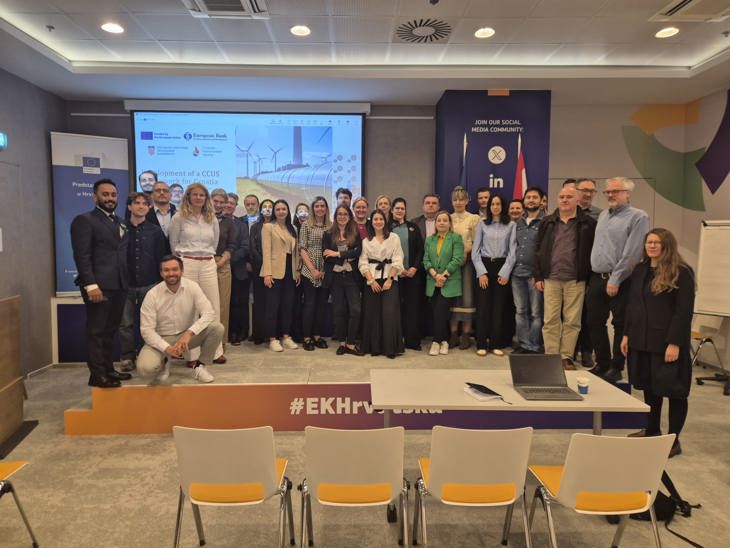
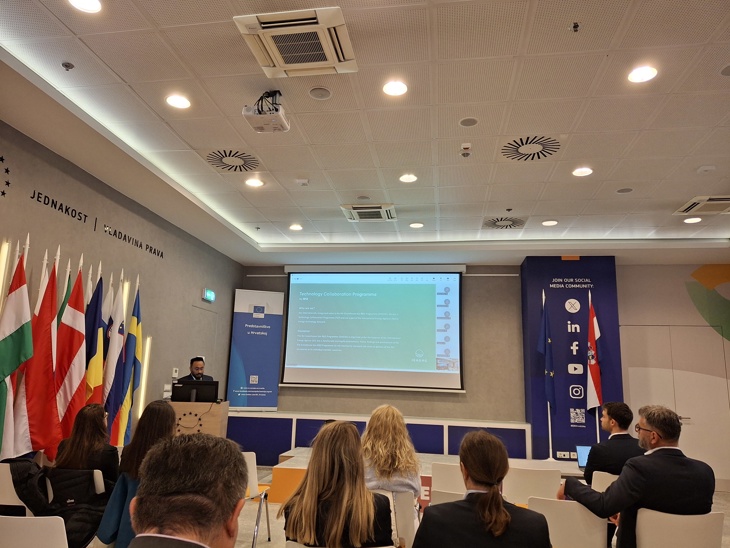
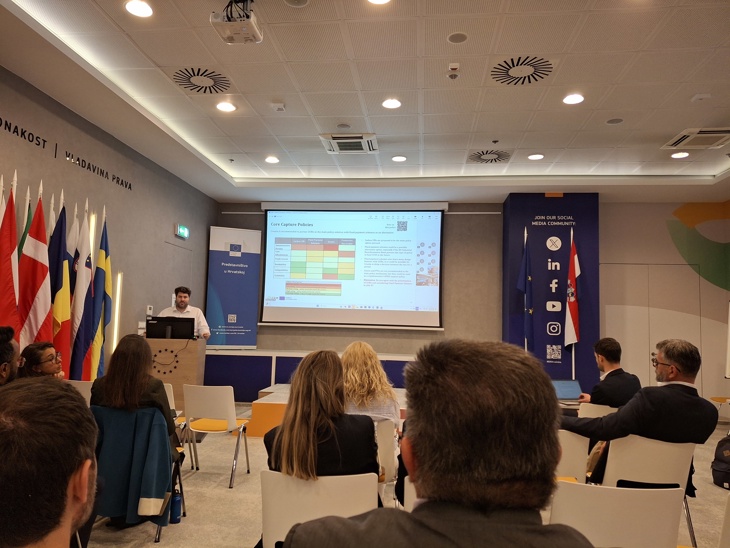
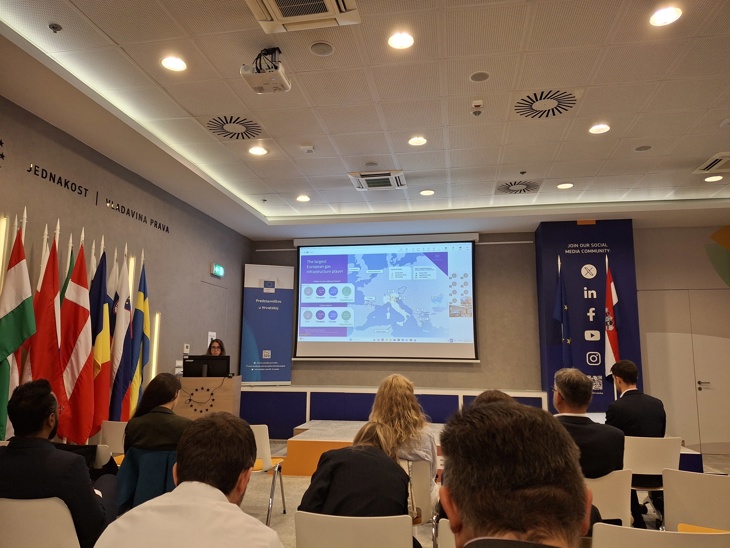
On 29 and 30 April 2026, the Croatian Hydrocarbon Agency and the Ministry of Economy, as project beneficiaries, actively participated in the second workshop of the project “Development of a Regulatory and Policy Framework for the Implementation of CCUS Activities in Croatia.”
The workshop aimed to identify concrete recommendations and highlight potential gaps in the regulatory, legal, and policy framework governing CO₂ capture, transport, and geological storage projects.
The second workshop, organized within the framework of a project funded by the European Union through the Technical Support Instrument (TSI), brought together stakeholders to whom the consortium (ERM, IOM Law and IMWAY Consulting with a team of local experts), in cooperation with the European Bank for Reconstruction and Development (EBRD) and the European Commission's Task Force on Reform and Investment (SG Reform), presented the results of the conducted analysis of the regulatory and policy framework.
The workshop was marked by a substantive and constructive discussion among key stakeholders, including the Ministry of Spatial Planning, Construction and State Assets, the Ministry of Environmental Protection and Green Transition, the Ministry of Regional Development and EU Funds, the Environmental Protection and Energy Efficiency Fund, the Croatian Energy Regulatory Agency (HERA), the Plinacro as gas transmission system operator, and the PSP as underground gas storage operator. Non-governmental organizations such as the Croatian Chamber of Economy and CAFT also participated, and IEAGHG provided an overview of the CCS value chain and its importance in decarbonization. The Snam, an Italian energy infrastructure company, presented the Ravenna CCS project, the first-of-kind project in the Adriatic Sea. The valuable overview of the legislative, political and information progress of the project in its early phase can be guideline and reflect an example of lessons learned for Croatia. The visibility and interest of the project were also enhanced by the participation of neighboring countries, with representatives from the Slovenian ministries responsible for economy and environment, as well as industry representatives from Slovenia, Austria and Bosnia and Herzegovina.
Representatives of ministries, regulatory bodies, and industry, including INA and Holcim, made a significant and valuable contribution to shaping recommendations and identifying key challenges within the existing legislative and policy framework.
It was particularly emphasised that the current regulatory and legal framework for CCS activities in Croatia has not yet been tested through fully implemented projects, underscoring the need to develop targeted and actionable recommendations for its improvement. At the same time, the importance of establishing a clear and coherent policy framework, along with financially sustainable and bankable support mechanisms, was highlighted as essential for enabling the successful deployment of CCS projects. In this context, drawing on best practices from countries such as Italy, Greece, Denmark, Sweden, and Norway was recognised as especially valuable.
We extend our sincere thanks to all stakeholders and industry representatives for their active engagement and valuable contributions. Special appreciation goes to IEAGHG and Snam for sharing important international experience and lessons learned from the Ravenna CCS Project, further enriching the discussion and providing valuable insights for the future development of CCS projects in Croatia.